 Mốc I : Hoàn cảnh trước khi Phật ra đời
 Mốc II : Sự kiện Phật đản sanh
 Mốc III: Giai đoạn tuổi thơ của Bồ tát Tất Đạt Đa
 Mốc IV : Giai đoạn trưởng thành - xuất gia
 Mốc V : Tầm đạo
 Mốc VI : Thành đạo
 Mốc VII: Những vị đệ tử đầu tiên
 Mốc VIII : Tăng đoàn lớn mạnh
 Mốc IX: Mười ba năm cuối cuộc đời Đức Phật
 Mốc X : Đức Phật nhập niết bàn

 Chư thiên
Không rõ
Cập nhật: 17/10/2026
Xem chi tiết →

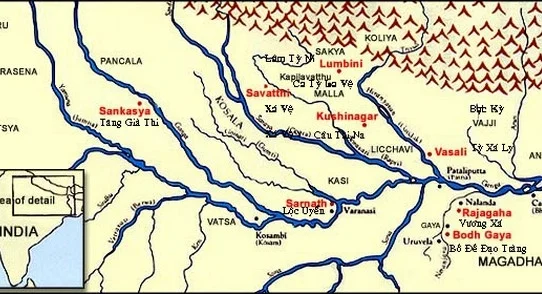
 Vương quốc Kosala
+
Vương quốc Magadha
+
Sakya
+
Koliya (Câu-lợi)
+
Nước Kasi
+
Nước Bạt-kỳ (Vajji)
+
Nước Avantī
+
Xứ Kurū
+
Cộng hoà Malla
+
Vương quốc Vatsa
+
Nước Ālavī
+
Nước Pañcāla
+
Tích Lan (Lanka - Sri Lanka)
+
Vương quốc Aṅga (Anga)
+
Nước Ceti (Cedi/Cetiya)
+
Nước Maccha (Matsya)
+
Nước Sūrasena
+
Nước Assaka (Asmaka)
+
Nước Gandhāra
+
Nước Kamboja
Các vị thiên xuất hiện trong thời Đức Phật
Chư thiên
 Chư thiên
 Chư thiên
 Chư thiên
 Chư thiên
 Chư thiên
 Chư thiên
 Chư thiên
 Chư thiên
III. Màgha (S.i,47) (Tạp 49.16 Ma-khứu, Ðại 2,360c) (Biệt Tạp 15.11, Ðại 2,478c) 1) Tại Sàvatthi. 2) Rồi Thiên tử Màgha, sau khi đêm đã gần mãn, với dung sắc thù thắng chói sáng toàn vùng Jetavana, đi đến Thế Tôn, sau khi đến, đảnh lễ Thế Tôn rồi đứng một bên. Ðứng một bên, Thiên tử Màgha nói với Thế Tôn bài kệ:
Chư thiên
IV. Màgadha 1) Ðứng một bên, Thiên tử Màgadha nói lên với Thế Tôn bài kệ: Vật gì chiếu sáng đời, Do chúng, đời chói sáng? Con đến hỏi Thế Tôn, Muốn nghe lời giải đáp. Bốn vật chiếu sáng đời,
Chư thiên
Dāmali.-A devaputta who visits the Buddha at Jetavana and tells him that an arahant has to work hard for nothing. The Buddha points out to him that there is nothing left for an arahant to do. S.i.47.
Chư thiên
Kāmada A devaputta who visited the Buddha and told him that the path of the Ariyan disciples was hard to follow and their goal hard to win. The Buddha pointed out to him that the difficult thing had been and was being accomplished (S.i.48). The Commentary (SA.i.83) explains that Kāmada had been a yogāvacara on earth, but had died before he could attain to any Fruits of the Path and that here he laments his disappointment.
Chư thiên
1. Pañcālacanda A devaputta who visited the Buddha at Jetavana and uttered a verse to the effect that the man who understands jhāna finds room even among crowding obstacles. The Buddha corrects him, saying that those who are mindful and self possessed know the way to Nibbāna (S.i.48). This discussion forms the basis for the Pañcāla Sutta (above.) It is probably this same deva who is mentioned as a Mahāyakkha in the Atānātiya Sutta (D.iii.205) who is to be invoked by the Buddha's followers in time of need.
Chư thiên
Tāyana A devaputta. He visited the Buddha at Sāvatthi and uttered certain verses in the hearing of the monks, telling of the necessity of following the recluse's calling with energy and sincerity. After his departure the Buddha asked the monks to learn the verses for their own good (S.i.49). The Commentary (SA.i.85) says that he was once a dissentient teacher, like Nanda, Vaccha, Kisa, Sankicca, etc., and taught some of the sixty-two views enumerated in the Brahmajāla Sutta. By the power of good deeds and by believing in Kamma, he was reborn in the heavens. Discerning from there that at length a really saving Dhamma and Order had been founded, he came to incite the Buddha's disciples.
Chư thiên
1. Candimā, Candimasa, Canda.-The name of the devaputta whose abode (vimāna) is the moon (Canda), sometimes also called Candima. The moon is forty-nine leagues in diameter and appears in the world at the wish of the ābhassara Brahmas, who are the first inhabitants of the earth, hence its name (amhākam chandam ñatvā viya utthito, tasmā cando hotū ti) (VibhA.519; PsA.253).


 Đang tải