
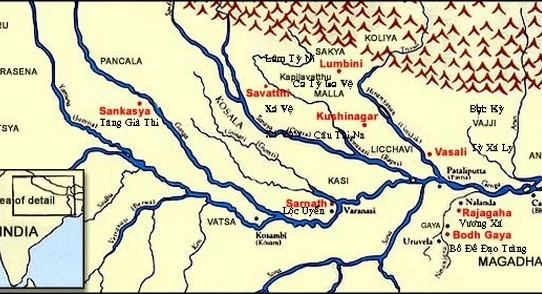
 Vương quốc Kosala
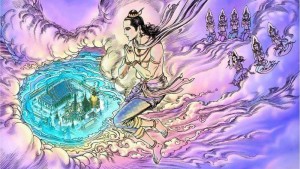 Mốc I : Hoàn cảnh trước khi Phật ra đời
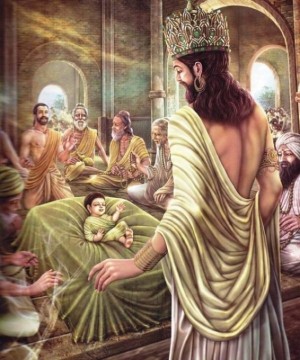 Mốc II : Sự kiện Phật đản sanh
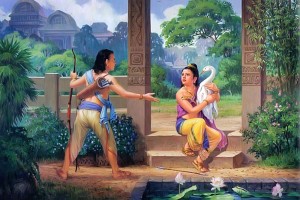 Mốc III: Giai đoạn tuổi thơ của Bồ tát Tất Đạt Đa
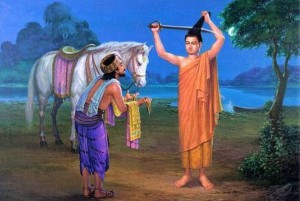 Mốc IV : Giai đoạn trưởng thành - xuất gia
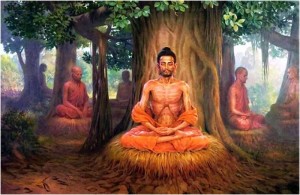 Mốc V : Tầm đạo
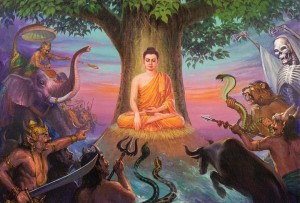 Mốc VI : Thành đạo
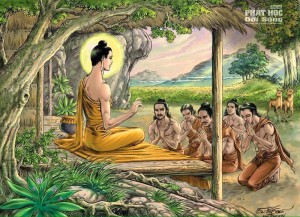 Mốc VII: Những vị đệ tử đầu tiên
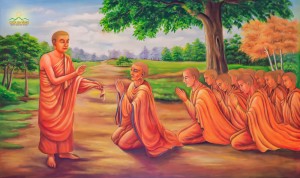 Mốc VIII : Tăng đoàn lớn mạnh
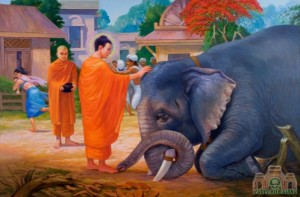 Mốc IX: Mười ba năm cuối cuộc đời Đức Phật
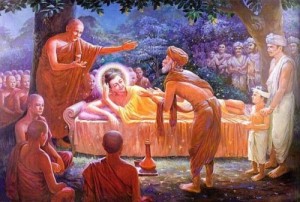 Mốc X : Đức Phật nhập niết bàn


Kinh Trung Bộ ENG 116 Kinh Thôn Tiên (Isigili sutta)
Kinh Trung Bộ ENG 116 Kinh Thôn Tiên (Isigili sutta)
Majjhima Nikāya
III. Upari Paṇṇāsa
2. Anupada Vagga
The Middle Length Sayings
III. The Final Fifty Discourses
2. The Division of the Uninterrupted
Sutta 116
Isigili Suttaɱ
Translated from the Pali by I.B. Horner, O.B.E., M.A.
Associate of Newham College, Cambridge
First Published in 1954
Copyright The Pali Text Society
Commercial Rights Reserved
For details see Terms of Use.
[1][chlm][piya][upal] Thus I have heard:
At one time the Lord was staying near Rājagaha
on Isigili mountain.
While he was there the Lord addressed the monks, saying:
“Monks.”
“Revered One,” these monks answered the Lord in assent.
The Lord spoke thus:
“Do not you, monks, see this Vebhāra[1] mountain?”
“Yes, revered sir.”
[111] “There was another designation, monks, of this Vebhāra mountain,
another name.
Do not you, monks, see this Paṇḍava mountain?”
“Yes, revered sir.”
“There was another designation, monks,
of this Paṇḍava mountain,
another name.
Do not you, monks, see this Vepulla mountain?”
“Yes, revered sir.”
“There was another designation, monks,
of this Vepulla mountain,[2] another name.
Do not you, monks, see this Gijjhakūṭa mountain?”[3]
“Yes, revered sir.”
“There was another designation, monks,
of this Gijjhakūṭa mountain,
another name.
Do not you, monks, see this Isigili mountain?”
“Yes, revered sir.”
“This has always been the designation, monks,
this always the name
of this Isigili mountain.
Once upon a time, monks,
five hundred paccekabuddhas[4]
dwelt for a long time
on this Isigili mountain.
They were seen
as they were entering this mountain,
but once they had entered
they were not seen.
People seeing this, spoke thus;
‘This mountain swallows these seers’ (isī gilati);[5]
so did Isigili receive the very designation Isigili.
I will point out to you, monks,
the names of the paccekabuddhas;
I will relate, monks,
the names of the paccekabuddhas;
I will tell, monks,
the names of the paccekabuddhas.
Listen, attend carefully
and I will speak.”
“Yes, revered sir,”
these monks answered the Lord in assent.
The Lord spoke thus:
“Ariṭṭha,[6] monks,
was a paccekabuddha
who lived in this Isigili mountain for a long time.
Upariṭṭha[7] monks,
was a paccekabuddha
who lived in this Isigili mountain for a long time.
Tagarasikhin[8] monks,
was a paccekabuddha
who lived in this Isigili mountain for a long time.
Yasassin[9] monks,
was a paccekabuddha
who lived in this Isigili mountain for a long time.
Sudassana[10] monks,
was a paccekabuddha
who lived in this Isigili mountain for a long time.
Piyadassin monks,
was a paccekabuddha
who lived in this Isigili mountain for a long time.
Gandhāra monks,
was a paccekabuddha
who lived in this Isigili mountain for a long time.
Piṇḍola monks,
was a paccekabuddha
who lived in this Isigili mountain for a long time.
[112] Upāsabha monks,
was a paccekabuddha
who lived in this Isigili mountain for a long time.
Nitha monks,
was a paccekabuddha
who lived in this Isigili mountain for a long time.
Tatha monks,
was a paccekabuddha
who lived in this Isigili mountain for a long time.
Sutavā monks,
was a paccekabuddha
who lived in this Isigili mountain for a long time.
Bhāvitatta monks,
was a paccekabuddha
who lived in this Isigili mountain for a long time.
Those essences of beings,[11]
unafflicted,[12]
without longing,
who individually have come to right enlightenment –
Listen to me
as I am relating the names of these barbless[13]
incomparable men:
Ariṭṭha, Upariṭṭha, Tagarasikhin, Yasassin
and Sudassana, Piyadassin the enlightened;
Gandhāra, Piṇḍola, and Upāsabha,
Nitha, Tatha, Sutavā, Bhāvitatta;
Sumbha, Subha, Methula and Aṭṭhama,
Athassumegha, Anigha, Sudāṭha
are paccekabuddhas whose conduits for becoming are destroyed;
Hiṅgū and Hiṅga of great majesty,
the two sages Jālin,[14] and Aṭṭhaka,
then Kosala the awakened one, then Subāhu,
Upanemi, this Nemi, this Santacitta, truthful, real, stainless and wise;
Kāḷa, Upakāḷa, Vijita and Jita and Aṅga and Paṅga and Gutijjita;
Passin renounced cleaving to the root of anguish, Aparājita defeated Māra’s might;
Satthā, Pavattā, Sarabhaṅga, Lomahaɱsa, Uccaṅgamāya, Asita, Ānāsava,
Manomaya, and Bandhumā the cutter away of pride, Tadādhimutta, and Ketumā the stainless;
Ketuɱbarāga and Mātaṅga, Ariya, then Accuta, Accutagāma, Byāmaka,
Sumaṅgala, Dabbila, Supatiṭṭhito, Asayha, Khemābhirata and Sorata,
Durannaya, Saɱgha, and then Ujjaya, and then the sage Sayha of sublime courage;[15]
[113] Ānanda, Nanda, Upananda (making) twelve,[16] Bhāradvāja bearing his last body,
Bodhi, Mahānāma, then too the other Bhāradvāja, hair-crested, beautiful,
Tissa, Upatissa, Upasīdarin, the cutters away of the bonds of becoming, and Sīdarin, the cutter away of craving;
The buddha[17] called Maṅgala, attachment-gone, Usabha who cut away the ensnaring root of ill;
Upaṇīta who attained the peaceful path, Uposatha, Sundara, Saccanāma,
Jeta, Jayanta, Paduma, Uppala and Padumuttara, Rakkhita and Pabbata;
Mānatthaddlia, Sobhita, Vītarāga and the buddha[17] Kaṇha, well freed in mind –
These and others[18] are paccekabuddhas of great majesty, their conduits for becoming destroyed.
Praise all these immeasurable great seers who have attained final nibbāna.”
Discourse at Isigili;
The Sixth
[1] This and the four following names of mountains are the names of those surrounding Rājagaha; cf. SnA. 382.
[2] See S. ii. 190-193.
[3] This is “Mount Vulture-Peak.”
“cannot teach”. Not true. There are stories of their teaching. What they apparently lack is the inclination to teach, or they lack the charisma to attract followings.
 — p.p.
[4] Those who win enlightenment by themselves without the aid of a teacher; but they cannot preach Dhamma to others.
[5] MA. iv. 127 says that when these sages returned from their almsround the mountain would open like a huge pair of doors, and when they had entered it they stayed there and were to be seen no more.
[6] These thirteen names are to be found in D.P.P.N., with legends when they exist. I therefore give only a few references.
[7] Thag. 910.
[8] Ud. 50; UdA. 291; S. i. 92; Jā. iii. 299.
[9] Thag. 910.
[10] ThagA. i. 93; Ap. ii. 461.
[11] MA. iv. 129, “having spoken the names of the thirteen paccekabuddhas, now pointing out the names of those others who are the essences of beings …” Sattasāra, essences of beings, means: who have become the essences of beings, sattānaɱ sārabhūta.
[12] anigha = niddukkha, MA. iv. 129.
[13] visalla; cf. S. i. 180; Sn. 17, 86, 367.
[14] Cūḷa- and Mahā-Jālin, MA. iv. 129.
[15] anomanikkhama; D. iii. 156, MA. iv. 129 read –nikkama, called viriyattā, at MA.
[16] Four Ānandas, four Nandas and four Upanandas, MA. iv. 129.
[17] I.e. paccekabuddha.
[18] Among the five hundred paccekabuddhas, two and three and ten and twelve have the same name such as Ānanda, etc.; these and others are not spoken of separately here, MA. iv. 130.
Nguồn : Source link