
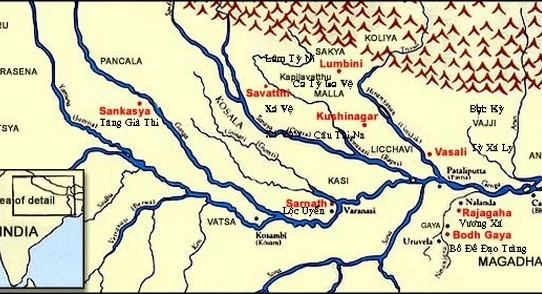
 Vương quốc Kosala
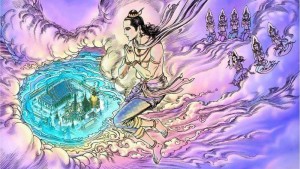 Mốc I : Hoàn cảnh trước khi Phật ra đời
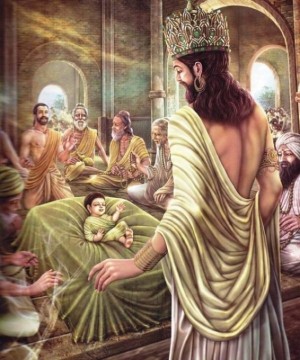 Mốc II : Sự kiện Phật đản sanh
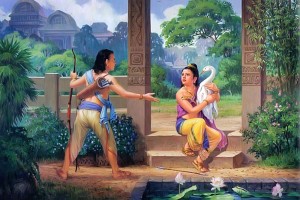 Mốc III: Giai đoạn tuổi thơ của Bồ tát Tất Đạt Đa
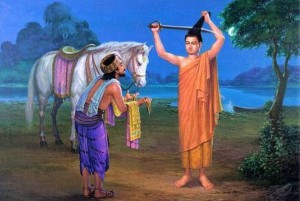 Mốc IV : Giai đoạn trưởng thành - xuất gia
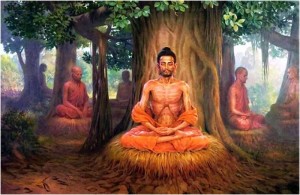 Mốc V : Tầm đạo
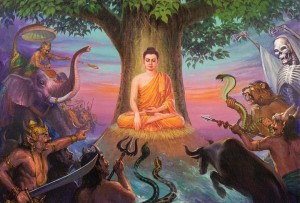 Mốc VI : Thành đạo
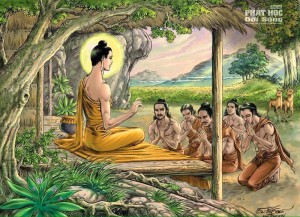 Mốc VII: Những vị đệ tử đầu tiên
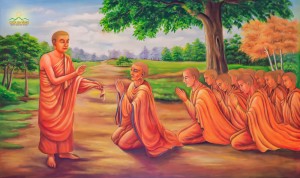 Mốc VIII : Tăng đoàn lớn mạnh
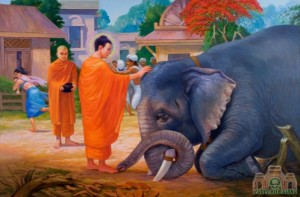 Mốc IX: Mười ba năm cuối cuộc đời Đức Phật
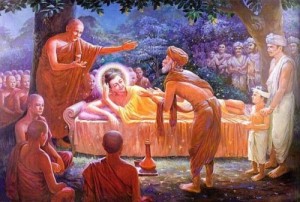 Mốc X : Đức Phật nhập niết bàn

MỤC LỤC NỘI DUNG
Mục lục nhân vật

Nhân vật Phật học
Ajita Kesakambali - 1 trong 6 vị thầy dị giáo thời Phật
Ajita Kesakambali (Sanskrit: अजित केशकंबली; Chinese: 阿耆多翅舍欽婆羅; pinyin: Ā-qí-duō chì-shě-qīn-pó-luó) was an ancient Indian philosopher in the 6th century BC.[1] He is considered to be the first known proponent of Indian materialism, and forerunner to the Charvaka school. He was probably a contemporary of the Buddha and Mahavira. It has frequently been...
719 lượt xem
#218 mã dữ liệu
Nam giới tính 28.02.2023 ngày khởi tạo 09.10.2026 cập nhật
THÔNG TIN KHÁI QUÁT
Xem kinh liên quan ↓
Dữ liệu nhân vật
- Giới tính
- Nam
- Mã dữ liệu
- #218
- Khởi tạo
- 28/02/2023
- Cập nhật gần nhất
- 19/11/2025 13:29
- Lượt xem
- 719
- Trạng thái nội dung
- Có nội dung chính
Tóm lược
Ajita Kesakambali (Sanskrit: अजित केशकंबली; Chinese: 阿耆多翅舍欽婆羅; pinyin: Ā-qí-duō chì-shě-qīn-pó-luó) was an ancient Indian philosopher in the 6th century BC.[1] He is considered to be the first known proponent of Indian materialism, and forerunner to the Charvaka school. He was probably a contemporary of the Buddha and Mahavira. It has frequently been noted that the doctrines of the Lokayata school were considerably drawn from Ajita's teachings.
HỒ SƠ Ajita Kesakambali - 1 trong 6 vị thầy dị giáo thời Phật
-
Ajitakesakambala (Ajitakesakambalī)
Head of one of the six heretical sects mentioned in the Pitakas as being contemporaneous with the Buddha. He is described as a Titthaka (heretical teacher), leader of a large following, virtuous and held in esteem by the people (S.i.68).
According to the Sāmaññaphala Sutta (D.i.55), where Ajātasattu describes a visit paid to Ajita, he taught the doctrine of "cutting off," i.e. annihilation at death. He was a nihilist who believed in neither good nor evil. In Tibetan sources he is stated to have taught that all beings must dwell in Samsara for 84,000 mahākalpas before they come to an end; nothing can prevent that (Rockhill: 103-4). The answer Ajita gave to Ajātasattu is given elsewhere (E.g., S.iii.207; M.i.515) as being the view of a typical sophist. His name is often introduced into the stereotyped list of the six teachers even where the views they are alleged to have expressed do not coincide with those attributed to Ajita in the Sāmaññaphala Sutta. E.g., S.iv.398, where he is represented as talking about the rebirths of his adherents - he who denied rebirth. In A.i.286 he seems to have been confused with Makkhali Gosāla. He was called Kesakambali because he wore a blanket of human hair, which is described as being the most miserable garment. It was cold in cold weather, hot in the hot, evil-smelling and uncouth (DA.i.144; MA.i.422-3).
According to the Mahābodhi Jātaka the Buddha had already refuted Ajita's view in previous births (J.v.246). Ajita was evidently much older in years than the Buddha, for we find Pasenadi, in the early years of his friendship with the Buddha, telling him that he was a young novice compared with Ajita. S.i.68.
In the Milinda-pañha the king says that he had visited a teacher named Ajitakesakambala. This cannot possibly refer to our Ajita; the reference is probably to a teacher belonging to the same school of thought ("There is neither fruit nor result of good or evil karma," p.4. His views are given on p.25 without mention being made of his name. But see note 2 to the Mil. trans., p.8.).
References to ascetics wearing hair garments are found in several passages of the Pali canon. D.i.167; M.i.77, 238; A.i.240; for a discussion of Ajita's views see Barua: Pre-Buddhistic Indian Philosophy, pp.287ff.
-
Ajitakesakambala (Ajitakesakambalī)
Người đứng đầu một trong sáu giáo phái dị giáo được nhắc đến trong Kinh Tạng là cùng thời với Đức Phật. Ông được mô tả là một Titthaka (giáo sư dị giáo), người lãnh đạo một nhóm tín đồ đông đảo, đức hạnh và được dân chúng kính trọng (Si68).
Theo Kinh Sāmaññaphala (Di55), nơi Ajātasattu mô tả chuyến viếng thăm Ajita , ông đã dạy giáo lý "cắt đứt", tức là sự hủy diệt khi chết. Ông là một người theo chủ nghĩa hư vô, không tin vào thiện hay ác. Trong các tài liệu Tây Tạng, ông được cho là đã dạy rằng tất cả chúng sinh phải sống trong luân hồi trong 84.000 đại kiếp trước khi kết thúc; không gì có thể ngăn cản điều đó (Rockhill: 103-104). Câu trả lời mà Ajita dành cho Ajātasattu được ghi lại ở những nơi khác (Ví dụ, S.iii.207; Mi515) là quan điểm của một nhà ngụy biện điển hình. Tên của ông thường được đưa vào danh sách rập khuôn của sáu vị đạo sư, ngay cả khi quan điểm mà họ được cho là đã bày tỏ không trùng khớp với quan điểm được cho là của Ajita trong Kinh Sāmaññaphala. Ví dụ, S.iv.398, nơi ông được miêu tả là đang nói về sự tái sinh của các tín đồ - người đã phủ nhận sự tái sinh. Trong Ai286, ông dường như bị nhầm lẫn với Makkhali Gosāla . Ông được gọi là Kesakambali vì ông mặc một tấm chăn làm bằng tóc người, được mô tả là loại y phục khốn khổ nhất. Nó lạnh vào mùa đông, nóng vào mùa hè, bốc mùi hôi thối và thô lỗ (DA.i.144; MA.i.422-3).
Theo Mahābodhi Jātaka, Đức Phật đã bác bỏ quan điểm của Ajita trong nhiều kiếp trước (Jv246). Ajita rõ ràng lớn tuổi hơn Đức Phật rất nhiều, vì chúng ta thấy Pasenadi , trong những năm đầu kết bạn với Đức Phật, đã nói với Ngài rằng Ajita chỉ là một sa di trẻ tuổi so với Ajita. Si68.
Trong Milinda-pañha, nhà vua kể rằng ông đã đến gặp một vị thầy tên là Ajitakesakambala. Điều này không thể ám chỉ đến Ajita của chúng ta; có lẽ ám chỉ đến một vị thầy cùng trường phái ("Không có quả báo của thiện nghiệp hay ác nghiệp", trang 4). Quan điểm của ông được ghi lại ở trang 25 mà không đề cập đến tên ông. Tuy nhiên, hãy xem chú thích 2 của bản dịch Milinda, trang 8.).
Có nhiều đoạn trong kinh điển Pali đề cập đến việc các nhà khổ hạnh mặc áo lông. Di167; Mi77, 238; Ai240; để thảo luận về quan điểm của Ajita, xem Barua: Triết học Ấn Độ tiền Phật giáo, trang 287 trở đi.
From Wikipedia, the free encyclopedia
|
Ajita Kesakambali |
|
|---|---|
| Born | 6th century BCE |
| Era | Sramana Movement |
| Region | Indian philosophy |
| School | Charvaka |
|
Notable ideas |
|
Ajita Kesakambali (Sanskrit: अजित केशकंबली; Chinese: 阿耆多翅舍欽婆羅; pinyin: Ā-qí-duō chì-shě-qīn-pó-luó) was an ancient Indian philosopher in the 6th century BC.[1] He is considered to be the first known proponent of Indian materialism, and forerunner to the Charvaka school. He was probably a contemporary of the Buddha and Mahavira. It has frequently been noted that the doctrines of the Lokayata school were considerably drawn from Ajita's teachings.
| Part of a series on |
| Hedonism |
|---|
| show
Thinkers |
| show
Schools of hedonism |
| show
Key concepts |
| show
Related articles |
Philosophy[edit]
| The views of six śramaṇa in the Pāli Canon (based on the Buddhist text Sāmaññaphala Sutta1) |
|
| Śramaṇa | view (diṭṭhi)1 |
| Pūraṇa Kassapa |
Amoralism: denies any reward or punishment for either good or bad deeds. |
| Makkhali Gośāla (Ājīvika) |
Niyativāda (Fatalism): we are powerless; suffering is pre-destined. |
| Ajita Kesakambalī (Lokāyata) |
Materialism: live happily; with death, all is annihilated. |
| Pakudha Kaccāyana |
Sassatavāda (Eternalism): Matter, pleasure, pain and the soul are eternal and do not interact. |
| Nigaṇṭha Nātaputta (Jainism) |
Restraint: be endowed with, cleansed by and suffused with the avoidance of all evil.2 |
| Sañjaya Belaṭṭhiputta (Ajñana) |
Agnosticism: "I don't think so. I don't think in that way or otherwise. I don't think not or not not." Suspension of judgement. |
| Notes: | 1. DN 2 (Thanissaro, 1997; Walshe, 1995, pp. 91-109). 2. DN-a (Ñāṇamoli & Bodhi, 1995, pp. 1258-59, n. 585). |
Like those of Lokayatins, nothing survives of Ajita's teachings in script, except some scattered references made by his opponents for the sake of refutation. Thus, due to the nature of these references, the basic framework of his philosophy has to be derived by filtering out obscure legends associated with him.
From Buddhist sources[edit]
According to a Buddhist legend Ajita wore a blanket of human hair (Kesakambali in Sanskrit means "with the hair blanket"), "which is described as being the most miserable garment. It was cold in cold weather, and hot in the hot, foul smelling and uncouth".[2] Ajita means "unconquered", which implies that he was very argumentative.[3]
According to an early Buddhist sources, Ajita Kesakambali argued that:
There is no such thing as alms or sacrifice or offering. There is neither fruit nor result of good or evil deeds. A human being is built up of four elements. When he dies the earthly in him returns and relapses to the earth, the fluid to the water, the heat to the fire, the wind to the air, and his faculties pass into space. The four bearers, on the bier as a fifth, take his dead body away; till they reach the burning ground, men utter forth eulogies, but there his bones are bleached, and his offerings end in ashes. It is a doctrine of fools, this talk of gifts. It is an empty lie, mere idle talk, when men say there is profit herein. Fools and wise alike, on the dissolution of the body, are cut off, annihilated, and after death they are not.[4]
According to the Brahmajala Sutta, Ajita propounded Ucchedavada (the Doctrine of Annihilation after death) and Tam-Jivam-tam-sariram-vada (the doctrine of identity of the soul and body), which denied the separate existence of an eternal soul.[2] The extent to which these doctrines, which were evidently inherited by Lokayata, were found contemptible and necessary to be refuted in the idealist, theist and religious literature of the time is a possible evidence of their popularity and, perhaps also, their philosophical sophistication.
Modern interpretations[edit]
D. D. Kosambi, who elsewhere[5] calls Ajita a proto-materialist, notes[6] that he "preached a thoroughgoing materialist doctrine: good deeds and charity gained a man nothing in the end. His body dissolved into the primary elements at death, no matter what he had or had not done. Nothing remained. Good and evil, charity and compassion were all irrelevant to a man's fate."
See also[edit]
Notes[edit]
- ^ "Indian rationalism, Charvaka to Narendra Dabholkar".
- ^ Jump up to:a b Bhaskar (1972)[page needed]
- ^ David J. Kalupahana (January 1995). Ethics in Early Buddhism. University of Hawaii Press. p. 18. ISBN 978-0-8248-1702-2. Retrieved 6 September 2013.
- ^ See: Rhys-Davids.T.W: Dialogues of the Buddha, 1899 quoted in Chattopadhyaya (1964/1993) pp.194
- ^ DD Kosambi (1956)[page needed]
- ^ DD Kosambi (1965)[page needed]
References[edit]
- Bhaskar, Bhagchandra Jain, Jainism in Buddhist Literature (Alok Prakashan, Nagpur, 1972)
- Chattopadhyaya, Debiprasad, Indian Philosophy (People's Publishing House, New Delhi, 1964, 7th Edition: 1993)
- Kosambi, DD, An Introduction to the Study of Indian History (Popular Prakashan, Mumbai, India, 1956)
- Kosambi, DD, The Culture and Civilisation of Ancient India in Historical Outline (Routledge & Kegan Paul, London, 1965)
- Ñāṇamoli, Bhikkhu (trans.) and Bodhi, Bhikkhu (ed.), The Middle-Length Discourses of the Buddha: A Translation of the Majjhima Nikāya (Wisdom Publications, Boston, 2001) ISBN 0-86171-072-X.
- Thanissaro Bhikkhu (trans.) Samaññaphala Sutta: The Fruits of the Contemplative Life (DN 2) (1997) Available on-line at http://www.accesstoinsight.org/tipitaka/dn/dn.02.0.than.html.
- Walshe, Maurice O'Connell (trans.), The Long Discourses of the Buddha: A Translation of the Dīgha Nikāya (Wisdom Publications, Somerville, MA, 1995) ISBN 0-86171-103-3.
Chưa có dữ liệu bản đồ cho nhân vật này.
KINH ĐIỂN Xuất hiện trong Nikaya
Xuất hiện ở nikaya khác ( tiểu bộ kinh )
TẠP A HÀM
Các bài kinh A Hàm có liên hệ với nhân vật
Báo lỗi nội dung
Chọn vấn đề bạn phát hiện. Quản trị viên sẽ nhận báo cáo kèm đúng trang hiện tại.
ĐIỀU HƯỚNG TỪ DATABASE
Mạng liên kết nội dung
Liên kết bên dưới được dựng phía server từ các quan hệ đang có trong cơ sở dữ liệu Nikaya Tâm Học.
13liên kết
Kinh & bài có nhân vật
2 mụcCác bài/Kinh liên kết trực tiếp với nhân vật này.
Nhóm nhân vật
3 mụcMở danh sách nhân vật cùng nhóm hiện hữu.
Nhân vật thường xuất hiện cùng
8 mụcTính từ bài chung và địa danh chung ở backend.
Đức Phật Thích Ca
→
Ngoại đạo sư Purana Kassapa – nhảy sông tự tử sau vụ thi triển thần thông
→
Nigantha Nātaputta (Nāthaputta) – người lãnh đạo Niganthā ( 1 trong 6 vị thầy dị giáo thời Phật)
→
Pakudha Kaccayana - 1 trong 6 vị thầy dị giáo thời Phật
→
Makkhali Gosala - 1 trong 6 vị thầy dị giáo thời Phật
→
Tôn Giả A Nan Đà Ananda – Đa Văn Đệ Nhất
→
Sanjaya Belatthiputta - 1 trong 6 vị thầy dị giáo thời Phật
→
Bà-la-môn Pingalakoccha
→